
- Home
- News
- Representatives of the Land Management Institute of the NAAS participated in the LandShift mid-term consortium meeting in Warsaw
28 April 2026 - admin
Representatives of the Land Management Institute of the NAAS participated in the LandShift mid-term consortium meeting in Warsaw
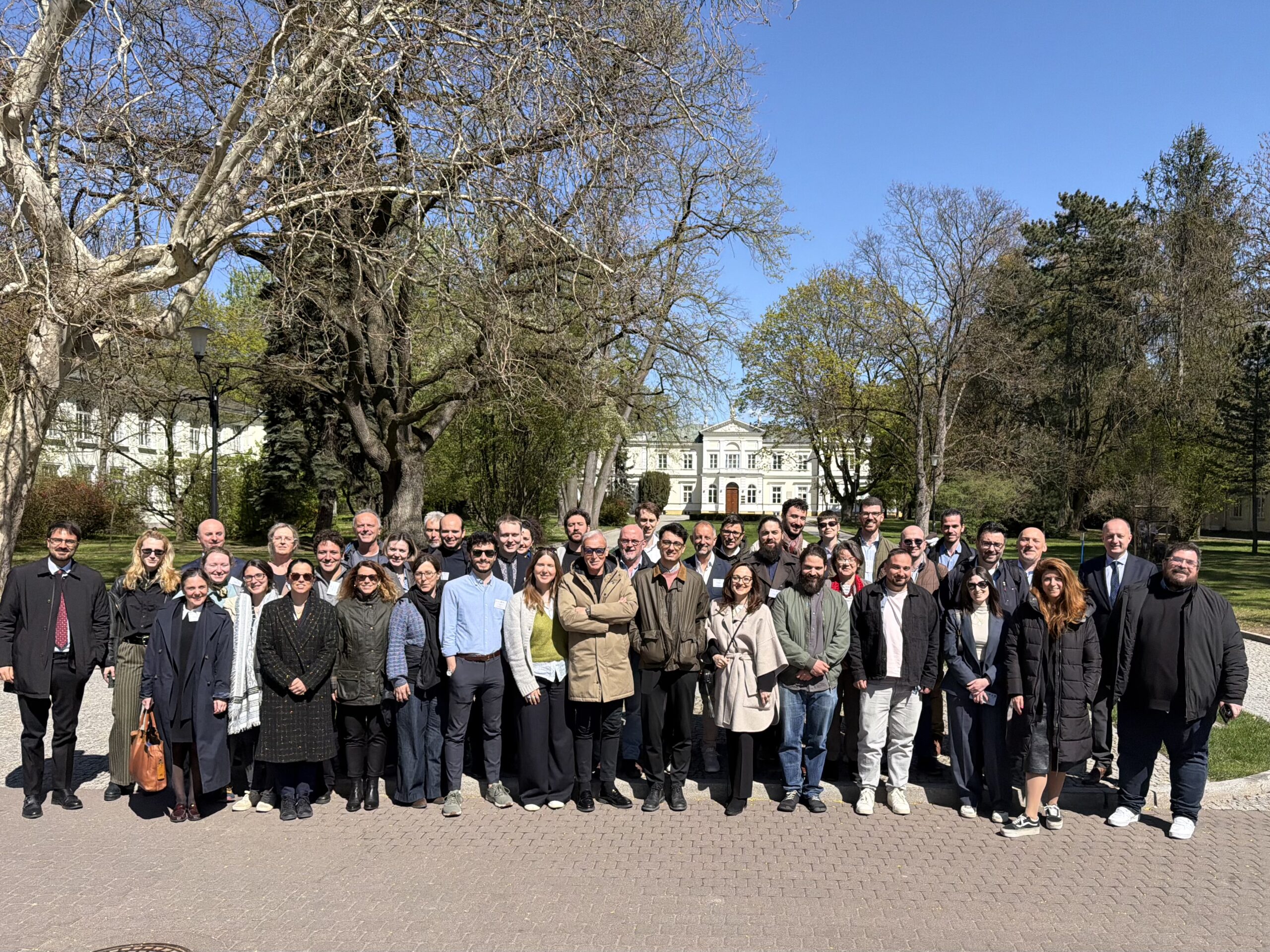
On April 22–24, 2026, representatives of the Land Management Institute of the National Academy of Agrarian Sciences of Ukraine took part in the LandShift mid-term consortium meeting, organized by our Polish partners.
The LandShift project (https://landshift.eu/) – “Community-Led Creation of Living Spaces in Shifting Landscapes for Climate-Resilient Land Use Management and Supporting the New European Bauhaus” – aims to transform land-use practices to enhance climate resilience and support the sustainable development of communities. The project is funded under the European Union’s research and innovation programme Horizon Europe in accordance with Grant Agreement No. 101182007.
The events were organized by representatives of the Warsaw University of Life Sciences (SGGW). We express our sincere gratitude to Professor Mariusz Maciejczak and his colleagues for the high level of organization and execution of the three-day agenda.
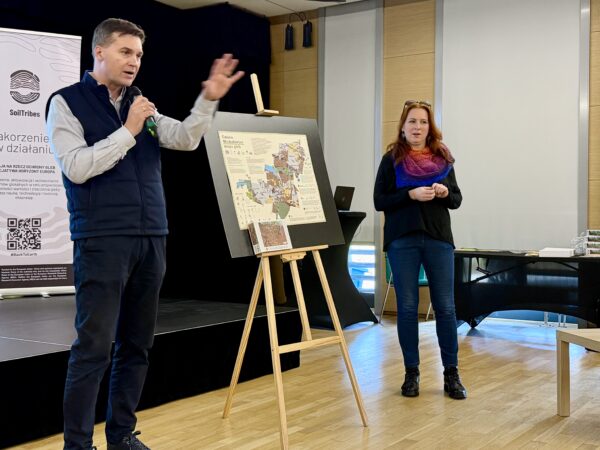
The first day (April 22) was dedicated to informal activities, including an introductory visit to the Warsaw University of Life Sciences (SGGW) and a visit to the Michałowice community, during which a professional discussion took place.
The day continued in Warsaw with a city tour focused on spatial development and urban planning. It concluded with a visit to a student pub on the university campus.
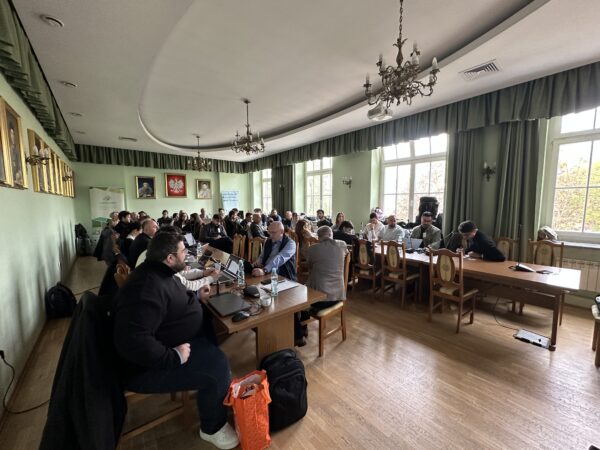
The second day (April 23) was the key day of the mid-term consortium meeting, as most reports and workshops were held then. The day began with welcoming remarks from Professor Mariusz Maciejczak, the host of the event, and Ioannis Varvaris, the scientific coordinator of the LandShift project, representing the coordinating institution — the Eratosthenes Centre of Excellence (Cyprus).
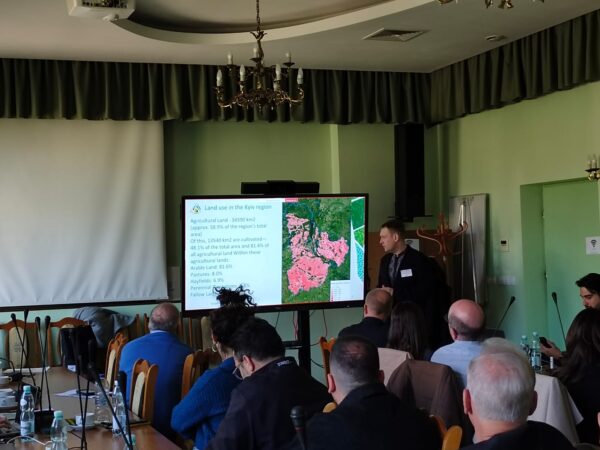
This was followed by presentations from representatives of the project’s Living Spaces, showcasing their achievements over the first 18 months of implementation. These Living Spaces represent regions in five countries where the project is being implemented.
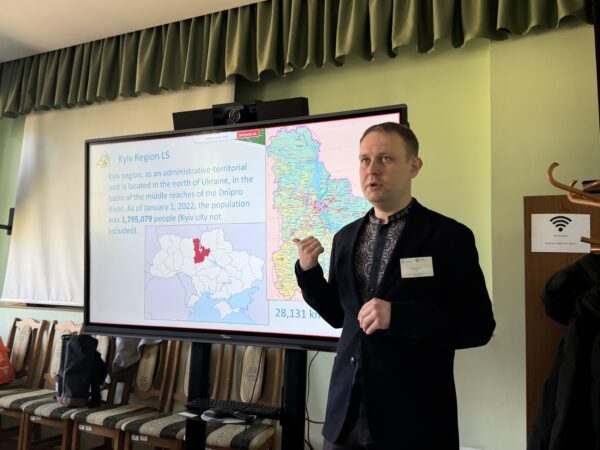
Kyiv region is one of the five Living Spaces, and therefore Ukrainian partners — the Land Management Institute, the Boyarka Forest Research Station, and the Kyiv Regional Council — presented their activities within the project. The report was opened by Andriy Dorosh (Land Management Institute), who presented the results of land use analysis in Kyiv region to provide context for the participants. He also spoke about stakeholder engagement activities carried out within the LandShift project in the region and highlighted the need to transform Ukrainian datasets to align with EU-standard classifications and formats.
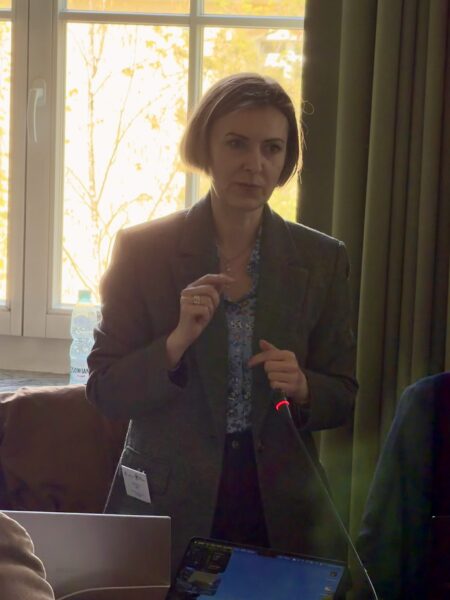
Oksana Sakal (Land Management Institute) presented the land use challenges identified in Kyiv region through collaboration with consortium partners and local stakeholders. She also outlined the specific complexities of stakeholder engagement and the organization of participatory activities.
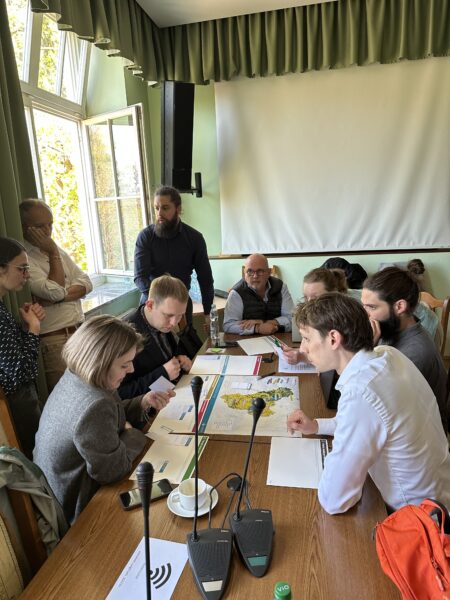
Following the reports of the work package leaders, participants proceeded to workshops under several tasks. In particular, the 2nd Quarterly Data Governance & Ethics Audit workshop played a significant role.
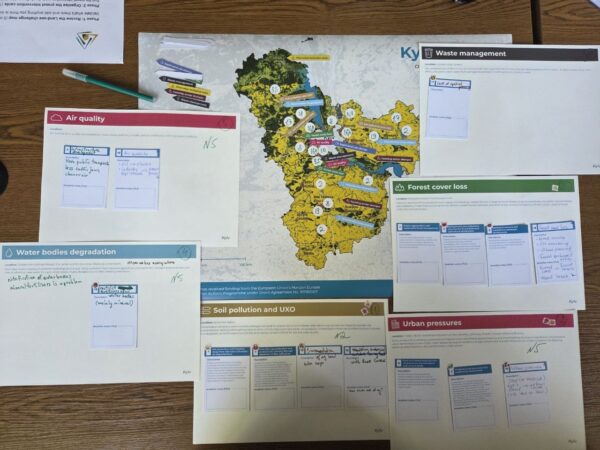
A key session for Kyiv region as a Living Space, and for the Ukrainian partners, was the workshop dedicated to developing a strategic roadmap under Task 3.5, organized by partners from the Metabolic Institute (Netherlands). During this workshop, in collaboration with international colleagues, participants discussed land use challenges in Kyiv region in detail, prioritized them, identified the most effective nature-based solutions, and mapped their potential areas of implementation
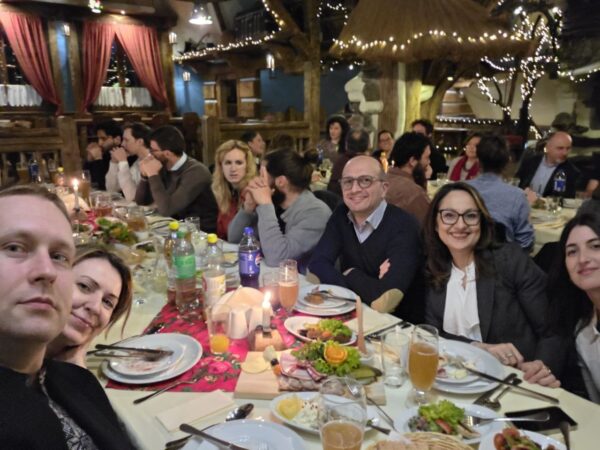
The intensive working day concluded with a social event — a joint dinner at a traditional Polish restaurant, which provided an opportunity to engage with colleagues and strengthen professional connections.
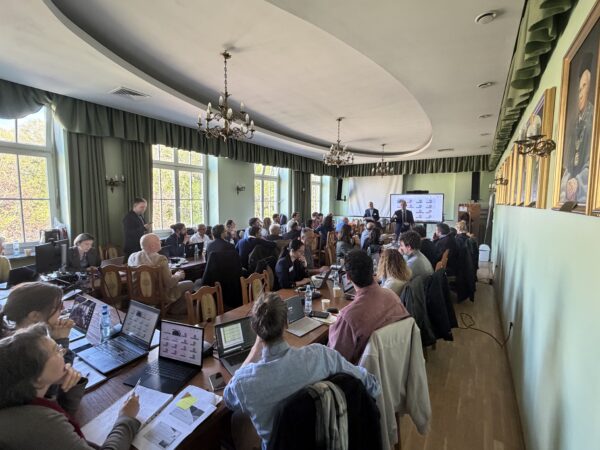
The third day (April 24) featured the presentation of the first version of the Living Earth Living Earth framework, a unique and novel concept that aims to capture the state and dynamics of Land Use and Land Cover change in a consistent and comparable manner. Another important session focused on the preparation of technical and financial reports for the first reporting period (the first 18 months).
The meeting concluded with a discussion session lasting approximately two hours, which allowed participants to address key issues across the consortium and propose ideas for further project implementation.
We look forward to our upcoming meetings and the final consortium meeting scheduled for October 2027.
Array